frances-ha-posterDirector Noah Baumbach is one of the most honest filmmakers working today. Often quixotically summed up as misanthropic or angst-ridden, Baumbach’s films actually feature an astute sense of humor that is not afraid to explore the deep emotional wounds we incur while growing up. It’s a difficult thing to turn humorous, and he has always handled it with masterful finesse.

Baumbach has directed films starring Ben Stiller (Greenberg, see my original review: Greenberg: The Great Projector) and Nicole Kidman (Margot at the Wedding). His screenplays stand out as offering refreshing new challenges to stars like Stiller and Kidman, who sink their teeth into these titular characters with heavy, damaged personalities to sometimes disturbing lows while offering a mordant sense of humor. It’s a fine line to walk as far as entertainment, but it’s a testament to his craft that he can attract such figures to his work despite the rather dark humor.

With Frances Ha, Baumbach finally seems to reveal a lighter touch. The film follows a young woman (Greta Gerwig, who also co-wrote the script) learning to let go of her best friend Sophie (Mickey Sumner, Sting’s daughter) frances-ha-still-3while figuring out how to make her own opportunities in her career choice: modern dance. The film is a testament to the oft-neglected stage of growing up in one’s later years, sometimes referred to as the quarter-life crisis. It’s not far off the mark from what makes the current buzzy HBO series “Girls” so popular, but Frances Ha is much more tidy and heartfelt. It has a charm influenced beyond concerns of the current generation usurping interest in current media. Both French New Wave and early Woody Allen are more relevant as influences than Gen Y malaise.

Maybe it’s the luminous black and white cinematography and setting, but a comparison to Allen’s Manhattan would not fall far from the mark. However, it’s how Baumbach has channeled French film— from Nouvelle Vague influences to a contemporary master— that will appeal to most cinephiles. Over all, 87the film has a tone recalling the bright but resonant personal dramedies of François Truffaut. Then there are specific scenes that pay conscious tribute to the wardrobe of Bande à part by Jean-Luc Godard and the more contemporary Leos Carax, involving the hit David Bowie song “Modern Love” and Frances running in the street, a la Mauvais sang.

More subtly, Baumbach employees a smart soundtrack featuring music by Georges Delerue, whose scores accompanied many films of the French New Wave. Witty cues and flourishes pepper the closing of many scenes in distinct homage. However, beyond the black and white cinematography and the music, the nostalgia ends there. In fact, it’s representative of the titular character’s condition who has found herself in a rut because she cannot seem to let go of her own past. Her inner child still seems to claw its way out from inside her despite put downs from a friend who blithely calls her “undatable” and a boss who has grown tired of stringing her along for some permanent position in a dance company Frances seems only half-invested in.

Gerwig dives into the character physically and facially. With her forced smile, raised eyebrows and furrowed brow, she plays Frances with an awkward charm that buoys her throughout the film’s many dramas. frances-ha-580Frances is so desperate for relevance, as her friends seemingly glide through life, be they “artists” with indulgent parents or lucky career climbers, she decides to charge a weekend trip to Paris, so she might “grow” a bit. Succumbing to jet lag and a friend who won’t answer her phone calls, the highlight of her trip may have been catching Puss in Boots in a movie theater off the Champs-Élysées.

As with any Baumbach film, the director knows how to pile on the witty, if sometimes sardonic, scenes at a break-neck pace. But the reason the script, which Baumbach co-wrote with Gerwig, feels so smart is not that these are jokes looking for easy laughs. They provide a charming avenue to develop Frances’ character while also making her relatable. The audience is not meant to look down at her state of arrested development but sympathize with it. The film has a wonderful way of piling on the moments of fleshing out the character without feeling redundant and still upping the stakes of the drama as her career becomes on the line, and her friendships drift away. It’s a valid fear everyone knows.

The brilliance of the film is how it can take a character in such a state and make it not only entertaining but also earn a sense of hope in the end. As much as she loves having friends and cannot seem to let go of her appreciation for animated movies (She says, “Animals have to talk or be at war for a movie to be interesting,”) or play fighting in the park, any growth ultimately has to come from within. You can give as much affection to your friends as you want but never neglect the friend you should be to yourself.

Hans Morgenstern

Frances Ha runs 86 minutes and is rated R (frank talk, including sexuality). It opens today, May 24, at the Coral Gables Art Cinema and the Regal South Beach Stadium 18 in Miami Beach for its South Florida premiere run (IFC Films provided an on-line screener for the purposes of this review). It also appears in West Palm Beach on May 31 at Living Room Theaters, Regal Shadowood and Regal Delray. Late next month it will arrive at the Miami Beach Cinematheque. Nationwide screenings dates can be found here. Update: “Miami New Times” has published my interview with the star of this film here (that’s a hot link; more on this to come).

(Copyright 2013 by Hans Morgenstern. All Rights Reserved. This material may not be published, broadcast, rewritten or redistributed without permission.)

upstreamcolor_bathtub

I consider Shane Carruth’s Primer among the best films of I saw in 2004. I caught it in an almost empty theater during a free preview, “hot” off its Grand Jury win at Sundance. The film took a brilliant look at time travel as something existing on a quantum level of alternate realities. It posited a twisted Pandora’s box of paradox that left many obsessed with unraveling the drama on the film’s website (that forum has since disappeared).

Nearly 10 years later and the director/actor/writer/musical composer, a true auteur if there ever was one in cinema, returns with a film featuring all of his talents once again. It arrives with even more hype as the myth of his achievement with Primer has grown along with the length of years of Carruth’s absence from filmmaking. Dare I say that Upstream Color falters in comparison with his debut. Whereas Primer featured a basis that spoke to the former software engineer-cum-filmmaker’s grasp of a subject matter more clumsily pulled off by mainstream or even sci-fi directors, the storyline of Upstream Color tackles a manipulation of altered states on a cerebral level that may have something to do with an alternate reality.

Usually, I more than other reviewers will champion notions of alternate realities, including dream states and psychological conditions, presented in film by harnessing the power of cinema through editing, story and other aspects of the medium. This makes me all the more sensitive to movies that falter in this regard. Disembodied loose ends should never be allowed to drift so far apart that gaps feel as vast as they do in this film. They feel like red herrings, but I have faith this meticulous filmmaker would never resort to such cheap gimmicks. Somewhere in his mind, everything that happens in the film is connected. I just wish the gaps were not painted with such cavernous brush strokes.

upstreamcolor_yelloworchid

I have read nothing about what this movie may or may not be about, save for one gushing, but delightfully confused article, in “Entertainment Weekly” and obtuse statements of praise disembodied from argument. Based on what I saw in the movie, part of its thrill may be just sitting there and going with its flow and figuring it out as one flows with the movie. In fact, a teaser poster for the film only featured the obscure statement: “You can force your story’s shape but the color will always bloom upstream.” Considering I have not even taken a peek at the film’s press materials for synopsis, it’s fair that I try a boilerplate summary, based on what I saw during a preview screening last week:

The film follows Kris (Amy Seimetz) a young, over-worked woman who is kidnapped, drugged and hypnotized into emptying her bank account by a fellow the film introduces as a quiet gardener. This gardener (Thiago Martins), referred to in the film’s end credits as “Thief” seems concerned with the grub worms in his potted orchids more than the plants themselves. In fact, it is soon revealed he is using the surviving grub worms as the narcotic that allows him to hijack Kris’ body. After a fever-dream like sequence where she is rescued from her state by a man referred to in the credits as “The Sampler” (Andrew Sensenig) via a skin graft from a pig, she seems to regain her self-awareness. Then come the side effects, which seem to draw Kris to another seemingly lost soul and former drone of the thief’s scheme, Jeff (Carruth playing his character cool and distant, not too unlike Adrian Brody would). A pig farm comes into play that is inter-cut with the drawing together of Kris and Jeff that suggest a sort of mystical synchronicity that may join the people with the swine. Cause and effect reveals these connections, and I could go further, but it might reveal too many of the film’s surprises.

upstreamcolor_samplenight

There is much mystery to be had in Upstream Color, and it’s made artfully, including a scene that— fair warning— may upset those who hate seeing harm done to animals on screen. Carruth is also behind the score, which is available as a vinyl record, on the film’s website, linked above. It features lots of droning humming ambient synthesized drones and busy, soft repetitive tinkling piano lines, reflecting the contemplative mood the film asks of the audience. The tone, in this case seems similar to Primer.

Clearly Carruth enjoys playing with perceptions. Early in the film he presents a brief red herring when he introduces Kris at work, composing a computer-generated commercial. It may be a signpost on how to take this film, which seems very aware of existing in its own universe that may have similarities to our current world, but also many decidedly different uses of things like orchids and pigs. This could very well be taking place a long time ago, in a galaxy far, far away, but that may just be too convenient. The trick lies in the cause and effects that never feel tight enough for one to feel connected to these characters. But then, that’s what the critics of Kubrick’s 2001: A Space Odyssey said about that film (For more read: How Stanley Kubrick broke the rules of Classical Hollywood cinema and made a better film with ’2001: A Space Odyssey’: My MA thesis redux – part 1 of 4). The jury’s still out on this film, as far as this writer’s concerned. I don’t feel the film deserves to be written off but nor does it necessarily deserve glowing praise, as there may be too much serendipity at play, especially in the panache department on behalf of the filmmaker. But if you enjoyed Primer on some level, you may still enjoy this. If this film is about alternate plains of perception, I still think eXistenZ did it better, and then there’s always the bubblegum version for neophytes: the Matrix.

Hans Morgenstern

Upstream Color runs 96 minutes and is unrated (expect violence to man and piggies alike, however). It opens at the Miami Beach Cinematheque this Friday, May 24, which invited me to a preview screening for the purposes of this review. The film is also playing nationwide and on demand; visit the movie’s website for screening dates (this is a hotlink).

(Copyright 2013 by Hans Morgenstern. All Rights Reserved. This material may not be published, broadcast, rewritten or redistributed without permission.)

ParadiseLoveposterWA_edited-1The first part in what is bound to be a difficult if powerful trilogy to sit through, Ulrich Seidl’s Paradise: Love patiently and subtly unfurls as a stark critique on colonialism and the formative effects it perpetuates. Filled with lots of casual nudity of pallid middle-aged, often over-weight Austrian women on holiday in Kenya seeking to enjoy young, dark, virile native men, the film has a raw human quality that is as visceral as it is shameful in its critique of a society that has neglected its responsibilities for its decimation of indigenous culture. What makes the film both so hard to watch and important to experience is its flagrant shaming of an ignorant middle class culture implicated in its ravenous apathy to consume, as it perpetuates its dominance in a capitalist world ruled by money and class systems. Seidl is Pasolini with a conscience.

The drama of Paradise: Love unfolds patiently and gradually reveals a humanism to all its characters that resonates beyond the film in the grand scheme of things. The most outstanding shots are Seidl’s brilliantly composed wide shots. They recall Wes Anderson in their busy quality and the dimension they add to characters. However, the tone could not be more different. The vintage wear and irony is transformed from precious to critical. There is humor, melancholy and grim undertones in the image of the rotund Teresa (a casually fearless Margarete Tiesel) reclining in her hotel bed in sheer, unmatched underwear below a painting of a primitively drawn leopard hanging out on a tree branch. Mosquito net curtains frame each side; the walls and tile floor, exude a history in their grimy white color.

Band

When Teresa arrives to the resort hotel on a white bus labeled “Comfort Safari” after driving past a shanty-like town, she is greeted to a modest row of four African women in zebra-print wrap dresses singing a song in their language with the refrain “Hakuna Matata,” with the accent on the last syllable. It stands out in contrast to the children’s ditty from Disney’s the Lion King, which emphasized the first syllable of the last word. In fact, the phrase, which translates to “no problem” (the once long-standing slogan to entice tourists to Jamaica) appears constantly in the film. By extension, beyond the critique of post-colonial apathy, the film implicates Disney for its co-opting of culture into a cartoonish commodity constantly marketed to the most vulnerable to commercialism: children.

It’s casual consumers eating up culture via corporations like Disney presenting experiences, that this film is targeting. That’s not to say people who buy tickets to Disney movies and theme parks or its toys, clothes, games and books are indecent people. They only want to have fun. Early in the film we meet Teresa as a woman who seems stuck in a rut but rather resigned to her position and status. Paradise Love womenShe chaperons a large group of mentally disabled to a day at a fair and has a teenager who would rather live on her cellphone screen than care for the state of her room. Seidl quickly sets his grandiose ironic tone, lingering for long takes on the contorted faces of the mal-developed adults in bumper cars. The sounds of their squeals and grunts echo in the ride and dominate the soundtrack. There is no music. If it’s uncomfortable, it is so by design and implication.

Teresa then struggles to get her overweight daughter out of her room plastered in posters of teen idols. She drops her at a relative’s house, and takes a selfie of the trio outside the home. She waves bye-bye, and she’s off to an adventure as a “sugar mama” to the locals in Kenya. She’s a rather insignificant person who treats people with a resigned decency than most are capable of, which adds to the gradually revealed and utterly horrific behavior toward the indigenous people of Kenya who work at the resort and stand on the other side of a short fence made of ropes on the beach or ride in circles on scooters on the other side of the resort’s guard gates.

The performances are brilliant in their stark and simple frankness. There are no lingering close ups that pander to the viewer’s emotional connection for a staged sympathy. Paradise Love 2When the 50-year-old hausfrau dishes out the shillings to the men who promise to protect her from those peddling trinkets on the beach or the street, there is also a sense that this woman only wants to be loved. As she gets deeper into it, she eats up the drama that comes when she chooses one man over another and then goes back again to another man, even if it’s all seemingly paid for.

All the while, the drama within the frame features scenes that are the epitome of ironic discomfort from the flagrant sexuality to the undertone of white material indulgence. It plays as much with the knowledge of the viewer as well as his or her conscience, transmitting comedy and tragedy at once in its statement of culpability. Paradise: Love is far from escapist cinema, but it is important cinema. In fact, very few films slap the viewer into looking at reality with such harsh yet subtle scenes. There is no cheap violence or overripe sexuality. This is raw and distant yet involving. Seidl is saying, “look,” with a soft, assured, even-toned voice, “this is you.”

Hans Morgenstern

Paradise: Love runs 120 minutes, is in English and Austrian with English subtitles and is unrated (the film features lots of frank, full-frontal sexuality). It opens at the Miami Beach Cinematheque this Friday, May 24, which provided a DVD screener for the purposes of this review. The trilogy continues at MBC with Paradise: Faith (about the grandmother’s “vacation”) in July and Paradise: Hope (about the daughter’s “vacation”) in October.

(Copyright 2013 by Hans Morgenstern. All Rights Reserved. This material may not be published, broadcast, rewritten or redistributed without permission.)

Daft Punk PR stillMore than half-way through the new Daft Punk album, and I feel it’s just Daft Punk lite. The inventive beats have mostly been supplanted by jangling disco guitars. Some of it reminds me of Hall and Oates with robot voices. There are some funky moments in Random Access Memories that recall late-1970s era Prince, but it’s still not as strong as some of the music on that legendary artist’s early work like Dirty Mind.

It’s a weird thing anticipation does. Having followed Daft Punk from the start, this new album seems to seep and swoosh around as easy-listening Saturday morning music, and lacks the sudden impact that earlier albums have had. How appropriate it shows up early in the morning on the weekend as the sun rises. If it’s dull, it’s pleasantly dull.

Decide for yourself, click the image below to visit the iTunes store and open your iTunes player (or download it) to hear it:

daft-punk-itunes

Edit: The last five minutes includes a bit of the noisy, driving Daft Punk that I first fell for.

Edit 2: Daft Punk have now released the entire album to stream via YouTube (iTunes stream still sounds better, though):

Hans Morgenstern

(Copyright 2013 by Hans Morgenstern. All Rights Reserved. This material may not be published, broadcast, rewritten or redistributed without permission.)

luss-enterprise-si-schianta-sulla-terraLens flares, zooms, explosions, 3-D, space ships, aliens! Ugh, that was exhausting. Still, I cannot knock Star Trek Into Darkness. It takes a crafty, passionate hand to do a film like this right. So often science fiction action films slip and stumble over the edge into camp or dance too sacrosanct in a pair of safe zones: talking down to children or challenging the adult intellect. The Star Trek franchise has long suffered all of these states except for a handful of transcendent moments on television or in the movies. Director J.J. Abrams, however. seems to have the ideal formula locked down.

A fourth theatrical film into his career, and there’s no doubt Abrams has an innate talent for the science fiction action genre. Super 8 was the fifth greatest film I saw in 2011 (An antidote for Oscar hype: My 20 favorite films of 2011 [numbers 10 – 1]). Before that, I appreciated his previous Star Trek film enough to purchase the Blu-ray, and I only buy about three to four new releases for my library per year. I have not seen Mission Impossible III, but I may correct that. But, most importantly, three sci-fi action films in, and I have no trouble calling him a better director than George Lucas. The more I learn about what happened behind the scenes of Star Wars: A New Hope, the more I feel its success came from serendipitous good fortune for Lucas. However, Abrams is the super-evolved spawn who grew up with Star Wars through the rose-colored glasses of 1970s youth. It seeped into his consciousness as a consumer, and he idealized it in a manner as most adults beguiled with nostalgic memories of the film’s release in 1977. The trick is he turned his passion into a talent for writing efficient scripts and later directing similar films. That’s what makes him the ideal choice to direct the seventh Star Wars movie.

stid2

Abrams’ talent unfurls in full blossom on the 3-D screen with Star Trek Into Darkness. His signature use of blue lens flares cut bright highlights into many shots. As much as he loves setting technology in motion, he also relishes in the way characters and nature react to it, adding a heft and presence beyond gravity. From puffs of steam from a levitating freight vehicle barreling down an invisible aerial road to the spaceship Enterprise wobbling through hyperspace, all these animated props are granted a deeper dimension. Abrams loves the zoom effect. From a classic use jolting the audience’s eyes to a closer look at a distant skirmish to melding wide exterior shots of floating spaceships to intimate close-ups of its crew, he keeps it feeling fresh and engaging.

The symphony of sonic overload during the violent scenes perpetrated by a mysterious character (A brooding and blistering performance by Benedict Cumberbatch) star-trek-into-darkness-benedict-cumberbatchwho comes out of nowhere to disrupt the peaceful mission of exploration by Starfleet is presented with balance against the mere mortals struggling with the ethics of deep space exploration and their own human (and sometimes alien) foibles. Abrams even indulges in some quiet moments. He set up one particularly frightful scene of violence by first presenting a couple fretting over a sickly daughter using barely a word of dialogue.

The actors dive full force into their characters, and no one over stays their welcome on the screen. One could say the film heightens their distinctions, from Dr. Leonard McCoy’s (Karl Urban) sardonic skepticism to Chekov’s (Anton Yelchin) humble desire to live up to a new task after Scotty (Simon Pegg) butts heads with the captain over the subtleties of the engine room on the Enterprise. The same can be said of the leads, Captain Kirk (Chris Pine playing cocky with ebullient charm) and Mr. Spock (Zachary Quinto delighting in Spock’s limited range of stoic and befuddled). star-trek-movieIt’s also a delight to have Uhura (an assuredly poised Zoe Saldana) raised to a high level of relevance from the original TV show to Spock’s love interest, as established in the previous film. To top it off, the passage of time since the last film reveals a witty layer of friction threatening the bond of Uhura and Spock in a manner that should distinguish a love affair between a human and a half human/half Vulcan. But the most fascinating actor to watch is Cumberbatch. As the slippery central nemesis of the film, he plays a sort of creature confident in his position above the beings around him. His presence in various scenarios takes the challenge of this character to all sorts of interesting levels, as one amusing kink in the plot piles on top of the other.

If there are any gripes about Star Trek Into Darkness, they are nitpicky ones. Maybe a syrupy exchange between a couple of characters in a life-and-death situation could have been cut with a few more drops of vinegar. The sexism heaped upon the women may be innate in the “Star Trek” world of the original television series from the ‘60s, but Abrams’ early work as creator of both the “Felicity” (with Matt Reeves) and “Alias” television serials proves he can do women fairer justice. But everything else works so clean and clear in Star Trek Into Darkness, these complaints only take up a few seconds of the film’s run time and hardly resonate through the rest of the movie.

With this brilliant Star Trek sequel, Abrams proves he knows how to create an atmosphere that engages movie audiences instead of pandering to them. As Star Trek Into Darkness breezes along the director always maintains an element of surprise and mystery to keep the drama moving forward. timthumbHe peppers in moments of wit throughout featuring dialog provided by a team of three capable writers (Roberto Orci, Alex Kurtzman and Damon Lindelof) whose combined sci-fi/action credits speak for themselves. Yet Abrams never indulges in the script for exposition. Instead, he uses it as part of a mood that serves the roller-coaster experience of the film. He knows there’s no room in sci-fi action for indulgent introspection. Sure Tarkovsky does fabulous intellectual sci-fi but leave that to him if you are not going to go dive into that sort of movie whole-hog. Though this reboot of the Star Trek movie franchise is slated to carry on with Abrams in a producer role, what he has proven exciting about his work with stale sci-fi franchises is that he can breathe vibrant life back into them. It bodes well for the upcoming series of Star Wars movies.

Hans Morgenstern

Star Trek Into Darkness is rated PG-13 and runs 132 (breezy) minutes. You can catch it at any multi-plex right now, including 2-D, 3-D and IMAX. Paramount pictures invited me to a 3-D screening Wednesday night for the purpose of this review.

(Copyright 2013 by Hans Morgenstern. All Rights Reserved. This material may not be published, broadcast, rewritten or redistributed without permission.)

simonkiller

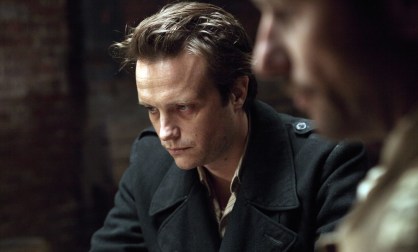
I had a chance to meet the young actor Brady Corbet during this year’s Miami International Film Festival (Actor Brady Corbet praises 35mm ahead of rare screening of ‘Au Hasard Balthazar’ at MIFF). We stayed in touch, which made it easy to get him to answer some questions about his new movie Simon Killera stylized thriller that relies on a meek protagonist who seems lost in a downward spiral of heartache after breaking up with a girlfriend.

The suspense relies a lot on Corbet’s subtle performance of a repressed, unstable young man who corners himself with his own lies about the world around him. Director Antonio Campos adds a languorous style that highlights the performance with some rather inventive use of camera tricks that transition several scenes. There’s also a hip soundtrack that includes a cover of Miike Snow’s “Animal” you probably never heard. Then there is a brilliantly staged scene at a disco featuring the opening of LCD Soundsystem’s “Dance Yrself Clean” that captures the titular character’s fearsome instability.

I sent Corbet an email to ask for a chat. He was in Paris, so we did it via email. The resulting Q&A can be read on the blog “Cultist” from the “Miami New Times.” Jump through the logo for the blog to read it:

cultist banner

Simon Killer runs 101 minutes and is unrated (Corbet says it would have probably received an NC-17 rating should it have been submitted to the MPAA). It opens at the Miami Beach Cinematheque this Friday, May 17, which provided a DVD screener for the purposes of this story. The film also opens in South Florida at the Cosford Cinema, in the University of Miami Coral Gables campus, the same day.The film is also playing nationwide and on demand; visit the movie’s website for screening dates (this is a hotlink).

Hans Morgenstern

(Copyright 2013 by Hans Morgenstern. All Rights Reserved. This material may not be published, broadcast, rewritten or redistributed without permission.)

P1010422Thanks to NPR Music’s “First Listen” series, Deerhunter’s new album Monomania has had two weeks to seep in. It soon became apparent that this album was a marvelous continuation of the Atlanta-based band’s arty noise-pop sound. Any doubts about this album for this writer lasted only halfway through the band’s premiere of the title track on Jimmy Fallon’s late night show a few weeks ago. Deerhunter would give one of the most brilliantly subversive television performances I had ever seen. Lead singer/guitarist Bradford Cox hid most of his face under a disheveled mop of a jet-black wig. He gripped a microphone on a stand with his right hand and snarled through the song. But the scene-stealer was a missing middle finger on his left hand. His face mostly hidden, one could not help but notice the bandaged and bloody nub where one of his fingers should have been. Though later proven a stunt (he had just curled up his finger and wrapped it tight), this “prop” raised the performance to an entrancing level, especially when one has to think what this might do to the guitarist/songwriter’s process considering the wall-of-guitar sound of Deerhunter.

tumblr_mkoqkhitZu1qhub34o1_500

Then, a little more than halfway through the song, as the band dove into a roaring cacophony of dueling guitars, Cox walked off the stage. A cameraman followed him backstage, as his mates bent over their respective instruments to squeeze the life out of their strings, seemingly oblivious to the disappearance of their frontman. Guitars still wailing in the distance, Cox walked past a couple chatting in a backstage hall, snatched a cup from a woman yapping and either chugged the cup of water or threw it in his own face (I can’t recall, the video is no longer on-line). With the band members still pounding on their instruments, he walked over to an elevator and pressed a button, as “Monomania” came to a sputtering end. Fallon walked over to the stage holding a vinyl copy of the album. “Deerhunter, everybody!”

This is the genius that informs this music that I have consistently celebrated since I first heard of Deerhunter via their third album, 2008’s Microcastle. Three albums later and Deerhunter have not lost their touch to these ears. The new album opens with two noisy tracks with vocals so loud they rattle eardrums, distorting beyond perception of lyrics as guitars screech and shimmer, dipping into sporadic bits of feedback. Then comes relief in “The Missing,” a pretty melody crafted by guitarist Lockett Pundt, who also has a noteworthy solo project called Lotus Plaza. Pundt’s shy, breathy singing is the perfect complement to the delicate songcraft: pretty guitars and synths sighing an iridescent harmonic whoosh under the bright guitars. None of these songs on their own would feel as potent taken out of the context from one another. It’s a great bit of dichotomy. To reduce Deerhunter as a grungy shoegaze/noise pop outfit interested solely in reverb is to overlook the patchwork brilliance of the entire experience of its albums.

Last week, the vinyl version of Monomania arrived, and it provided yet another layer of revelation. What becomes immediately noticeable, thanks to the clarity of vinyl, is the acoustic guitar strumming within the din of the opening  track, “Neon Junkyard.” There are also various whirs and fizzes that comprise the noise from unknown sources. The lyrics are also clearer, and the first line may as well be Deerhunter’s manifesto: “Finding the fluorescence in the junk/By night illuminates the day.”

P1010423

The great thing about noise pop albums on vinyl is how the format clears up the din like a high-definition video screen. There is finesse in the racket. The clarity of the instruments, from the strum of acoustic guitars to the pluck of bass strings, pops out with not just crispness but dynamism. “Blue Agent” contains a staccato lead guitar line the oozes liquidity. However, its terse delivery features a new dynamic in each pluck on vinyl. The sonic range via vinyl turns what could be regarded as a cute gimmick in playing to elevating the song with a deeper character that sounds far more human and real.

“T.H.M.” opens with a delicate guitar line and soft beat decorated with a shaker. P1010426The song picks up on a sprightlier beat with hand claps as another guitar jumps in to add another terse melody before returning to the more spare verse. The kicker comes when Cox supplements his growling lyrics with a chorus of asthmatic coughs.

Side two opens with a billowing whir and then bright guitars drive the song along toward a chorus featuring an echo effect capping off the end of each line Cox sings before more guitar strums pile up to swell and suddenly back off and let the initial hook trot along to the song’s finale. It’s a brilliant tease of noise versus melody. In fact, this side more than side one features the catchier tunes and reveals the early ‘90s/late ‘80s noise pop sonic influence from bands like Dinosaur Jr. and Pavement. However, whereas those bands were usually against keeping keyboards and keeping synths out of the mix, Deerhunter has no fear of using them to supplement its sound. Then again, there is that roar of an outboard motor that takes over from the crush of screeching guitars at the end of “Monomania.”

Beyond the gritty sound juxtaposed with brightness are the dark lyrics by Cox. That’s where the true heart of darkness of this album lies. As bright as “T.H.M.” P1010427sounds musically, the lyrics reference a violent death (“Took two bullets to the brain”) coupled with “coming out” and insanity. Throughout Monomania, the lyrics seem to wallow in misunderstanding and a frustrated solitude. It comes from a very real place, as Cox rarely sentimentalizes his homosexuality. Even Pundt’s only song, “the Missing,” fits the vibe of the album lyrically.

Deerhunter has always known its way around darker subject matter, and such deep exploration births an honest sound that does not always produce pure melody. The members of Deerhunter consistently prove themselves crafty with guitars and pop songs, but they know how to dig deeper to offer something much more dynamic with not only volume but cacophony. As ever, Deerhunter proves there is a beauty in noise. Monomania may have frayed and weathered edges but it’s representative of a real humanity beyond the songcraft.

Hans Morgenstern

(Copyright 2013 by Hans Morgenstern. All Rights Reserved. This material may not be published, broadcast, rewritten or redistributed without permission.)
Follow

Get every new post delivered to your Inbox.

Join 1,891 other followers